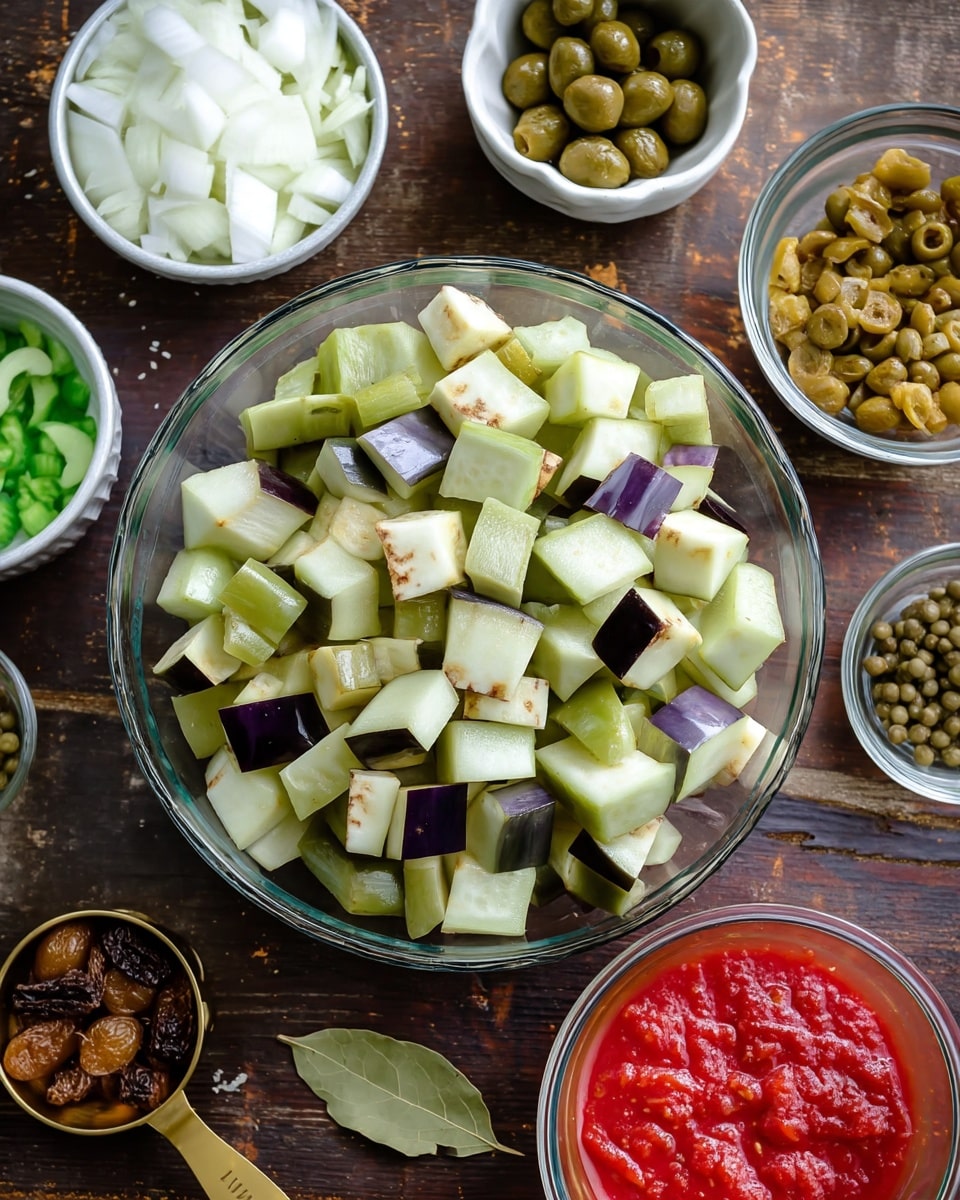
Sicilian Eggplant Caponata is a traditional Italian appetizer made with tender eggplant, tomatoes, olives, capers, and fresh herbs. It has a rich, savory flavor with a sweet and tangy finish from apple cider vinegar and sugar. I serve it warm or cold, often with toasted crusty bread. It’s a practical make-ahead dish for gatherings, appetizers, or Mediterranean-style meals.
Ingredients
(Note: All ingredient amounts are listed in the recipe card below.)
1 eggplant, peeled and cut into ½-inch cubes
salt to taste
¼ cup olive oil, divided
1 cup finely chopped celery
1 medium onion, finely chopped
1 clove garlic, minced
1 ½ cups canned plum tomatoes, drained and coarsely chopped
12 green olives, pitted and coarsely chopped
1 ½ tablespoons drained capers
1 tablespoon tomato paste
1 teaspoon freshly minced oregano
2 tablespoons apple cider vinegar
2 teaspoons white sugar
1 teaspoon salt
ground black pepper to taste
2 teaspoons minced fresh parsley, or to taste
Directions
1. Prepare the eggplant: I toss the cubed eggplant with salt and place it in a colander set over a bowl. I let it sit for about 30 minutes, then rinse and pat it dry.
2. Cook the celery: I heat 2 tablespoons of olive oil in a large skillet over medium heat. I add the celery and cook, stirring frequently, for 3–4 minutes until softened.
3. Add the onion and garlic: I stir in the chopped onion and minced garlic, cooking for another 4–5 minutes until the onion is soft and lightly golden. I transfer the mixture to a bowl using a slotted spoon.
4. Brown the eggplant: I heat the remaining 2 tablespoons of olive oil in the same skillet. I add the eggplant and cook for about 5 minutes, stirring constantly, until lightly browned.
5. Combine the ingredients: I return the celery mixture to the skillet and add the tomatoes, green olives, capers, tomato paste, and oregano. I stir everything together.
6. Simmer: I bring the mixture to a boil, then reduce the heat to low. I simmer uncovered for about 15 minutes until the caponata thickens.
7. Season: I stir in the apple cider vinegar, sugar, salt, and ground black pepper, mixing until evenly combined.
8. Garnish and serve: I transfer the caponata to a serving bowl and sprinkle with fresh parsley. I serve it warm or cold, usually with toasted crusty bread.
Servings and Timing
Servings: 16
Prep Time: 30 minutes
Cook Time: 30 minutes
Additional Time: 30 minutes
Total Time: 1 hour 30 minutes
Variations
For a slightly different flavor, I can use different varieties of green olives or add a little extra fresh oregano. I can also adjust the apple cider vinegar and sugar to make the caponata more tangy or sweet. For a chunkier texture, I keep the eggplant pieces slightly larger, allowing additional cooking time if needed. I sometimes serve caponata over toasted bread, alongside grilled vegetables, or as a topping for pasta.
Storage/Reheating
I let the caponata cool before transferring it to an airtight container and refrigerating it. The flavors develop as it rests, making it convenient to prepare a day ahead. I serve it cold or bring it to room temperature before serving. When I prefer it warm, I reheat it gently in a skillet over low heat, stirring occasionally until heated through.
FAQs
Can I make Sicilian Eggplant Caponata ahead of time?
Yes, I can prepare caponata a day before serving. Refrigerating it overnight allows the flavors to blend, making it a convenient make-ahead appetizer.
Do I need to peel the eggplant?
The recipe calls for peeled eggplant, which gives the finished caponata a softer texture. I peel it before cutting it into ½-inch cubes.
Why do I salt the eggplant before cooking?
Salting helps draw moisture from the eggplant before cooking. I let it rest for 30 minutes, then rinse and dry it thoroughly before adding it to the skillet.
Can I use fresh tomatoes instead of canned plum tomatoes?
Fresh tomatoes can be used, although their moisture content may affect the consistency. I prefer drained canned plum tomatoes for the texture specified in this recipe.
Can I make caponata without olives?
Yes, I can leave out the olives, although they contribute an important salty flavor. The finished dish will have a slightly different balance of flavors.
How do I know when the caponata is ready?
I look for tender eggplant and a thickened tomato mixture. The ingredients should be well combined without excess liquid in the skillet.
Can I serve Sicilian Eggplant Caponata cold?
Yes, caponata can be served warm or cold. I often serve it cold as an appetizer with toasted crusty bread.
What can I serve with Sicilian Eggplant Caponata?
I usually serve it with toasted baguette slices or crusty Italian bread. It also works as a side dish with grilled vegetables or as a topping for pasta.
Can I adjust the sweet and sour flavor?
Yes, I can adjust the apple cider vinegar and sugar slightly to suit my preference. I taste the caponata after simmering and make small adjustments before serving.
Can I freeze Sicilian Eggplant Caponata?
Caponata can be frozen, although the eggplant may become softer after thawing. I use an airtight freezer-safe container and thaw it in the refrigerator before gently reheating.
Conclusion
Sicilian Eggplant Caponata combines tender eggplant, tomatoes, olives, and capers in a savory sauce with a balanced sweet and tangy flavor. It’s a versatile Italian appetizer that can be served warm or cold with crusty bread. I can prepare it ahead of time for gatherings or serve it as part of a simple Mediterranean meal.
Sicilian Eggplant Caponata is a classic Italian appetizer featuring tender eggplant, juicy tomatoes, briny green olives, and capers in a rich, sweet-and-tangy sauce. This traditional Mediterranean dish is delicious served warm, at room temperature, or cold with toasted crusty bread, making it perfect for entertaining and make-ahead meals.
Ingredients
1 eggplant, peeled and cut into ½-inch cubes
Salt to taste (for preparing the eggplant)
¼ cup olive oil, divided
1 cup celery, finely chopped
1 medium onion, finely chopped
1 clove garlic, minced
1 ½ cups canned plum tomatoes, drained and coarsely chopped
12 green olives, pitted and coarsely chopped
1 ½ tablespoons capers, drained
1 tablespoon tomato paste
1 teaspoon fresh oregano, minced
2 tablespoons apple cider vinegar
2 teaspoons white sugar
1 teaspoon salt
Ground black pepper to taste
2 teaspoons fresh parsley, minced, or to taste
Instructions
Place the peeled and cubed eggplant in a colander set over a bowl. Sprinkle with salt and toss to coat evenly. Let the eggplant rest for approximately 30 minutes to release excess moisture. Rinse thoroughly under cold water and pat dry with paper towels.
Heat 2 tablespoons of olive oil in a large skillet over medium heat. Add the finely chopped celery and cook for 3–4 minutes, stirring frequently, until it begins to soften.
Add the chopped onion and minced garlic to the skillet. Continue cooking for another 4–5 minutes, stirring occasionally, until the onion becomes soft and lightly golden. Transfer the celery, onion, and garlic mixture to a bowl using a slotted spoon and set aside.
Add the remaining 2 tablespoons of olive oil to the same skillet. Add the prepared eggplant cubes and cook for approximately 5 minutes, stirring frequently, until the eggplant begins to soften and develops a lightly browned exterior.
Return the cooked celery, onion, and garlic mixture to the skillet with the eggplant. Add the drained and chopped plum tomatoes, green olives, capers, tomato paste, and freshly minced oregano. Stir thoroughly until all ingredients are evenly combined.
Bring the mixture to a gentle boil over medium heat. Reduce the heat to low and simmer uncovered for approximately 15 minutes, stirring occasionally, until the eggplant is tender and the tomato mixture thickens.
Stir in the apple cider vinegar, white sugar, 1 teaspoon salt, and ground black pepper to taste. Mix well to distribute the sweet-and-sour flavors evenly. Taste and adjust the vinegar, sugar, or seasoning as desired.
Remove the skillet from the heat and transfer the caponata to a serving bowl. Garnish with freshly minced parsley. Serve warm, at room temperature, or chilled with toasted crusty bread, baguette slices, or your favorite Mediterranean accompaniments.
Notes
Salting the eggplant before cooking helps draw out excess moisture and improves its texture. Allow it to rest for 30 minutes, then rinse and dry thoroughly before sautéing.
Peeling the eggplant creates a softer finished texture, but the skin can be left on if a slightly firmer texture is preferred.
Fresh tomatoes can replace canned plum tomatoes, although their moisture content may vary. Simmer longer if necessary to achieve the desired consistency.
Different varieties of green olives can be used to adjust the flavor. For a milder dish, choose less salty olives.
Omit the olives if preferred, but remember that they contribute an important savory and briny flavor.
Adjust the apple cider vinegar and white sugar to create a sweeter or more tangy caponata according to personal preference.
For a chunkier texture, cut the eggplant into slightly larger cubes and increase the cooking time until tender.
Add extra fresh oregano or a pinch of red pepper flakes for additional Mediterranean flavor and a subtle kick.
For the best flavor, prepare the caponata a day ahead and refrigerate overnight. The sweet, tangy, and savory flavors develop as the dish rests.
Serve as an appetizer with toasted baguette slices, crusty Italian bread, or crostini. It also pairs well with grilled vegetables or can be used as a topping for pasta.
Caponata tastes delicious warm, at room temperature, or chilled directly from the refrigerator.
Store cooled caponata in an airtight container in the refrigerator for up to 4 days.
To reheat, place the caponata in a skillet over low heat and stir occasionally until warmed through. Avoid overheating to preserve the texture of the vegetables.
For longer storage, freeze cooled caponata in an airtight freezer-safe container for up to 3 months. Thaw overnight in the refrigerator before reheating. The eggplant may become slightly softer after freezing.
For a gluten-free serving option, pair the caponata with gluten-free bread, rice crackers, or fresh vegetables instead of traditional crusty bread.
Nutrition values are approximate and calculated per serving based on 16 appetizer portions, excluding bread or other accompaniments.
Nutrition
Serving Size:1/16 of recipe (approximately 1/4 cup)