I love how quickly this hummus comes together. There is no cooking required, and my food processor does almost all the work.
The combination of tahini, olive oil, lemon, garlic, and cumin gives me a creamy dip with plenty of savory, nutty, and citrusy flavor. I can easily adjust the salt, lemon juice, and consistency until it tastes exactly how I like it.
I also appreciate how versatile hummus is. I serve it with vegetables, crackers, or pita, spread it onto sandwiches and wraps, or add a spoonful alongside salads and grain bowls.
Another reason I keep this recipe handy is how easily I can customize it. A little extra lemon makes it brighter, while paprika, herbs, or other seasonings allow me to change the flavor without complicating the recipe.
Ingredients
(Note: All ingredient amounts are listed in the recipe card below.)
▢2 cups chickpeas drained
▢½ cup tahini
▢¼ cup extra virgin olive oil
▢1 lemon juiced
▢2 cloves garlic peeled
▢1 tablespoon ground cumin
▢salt to taste
Garnish (Optional)
▢1 tablespoon parsley fresh, chopped
▢2 teaspoons extra virgin olive oil
▢⅛ teaspoon paprika
Directions
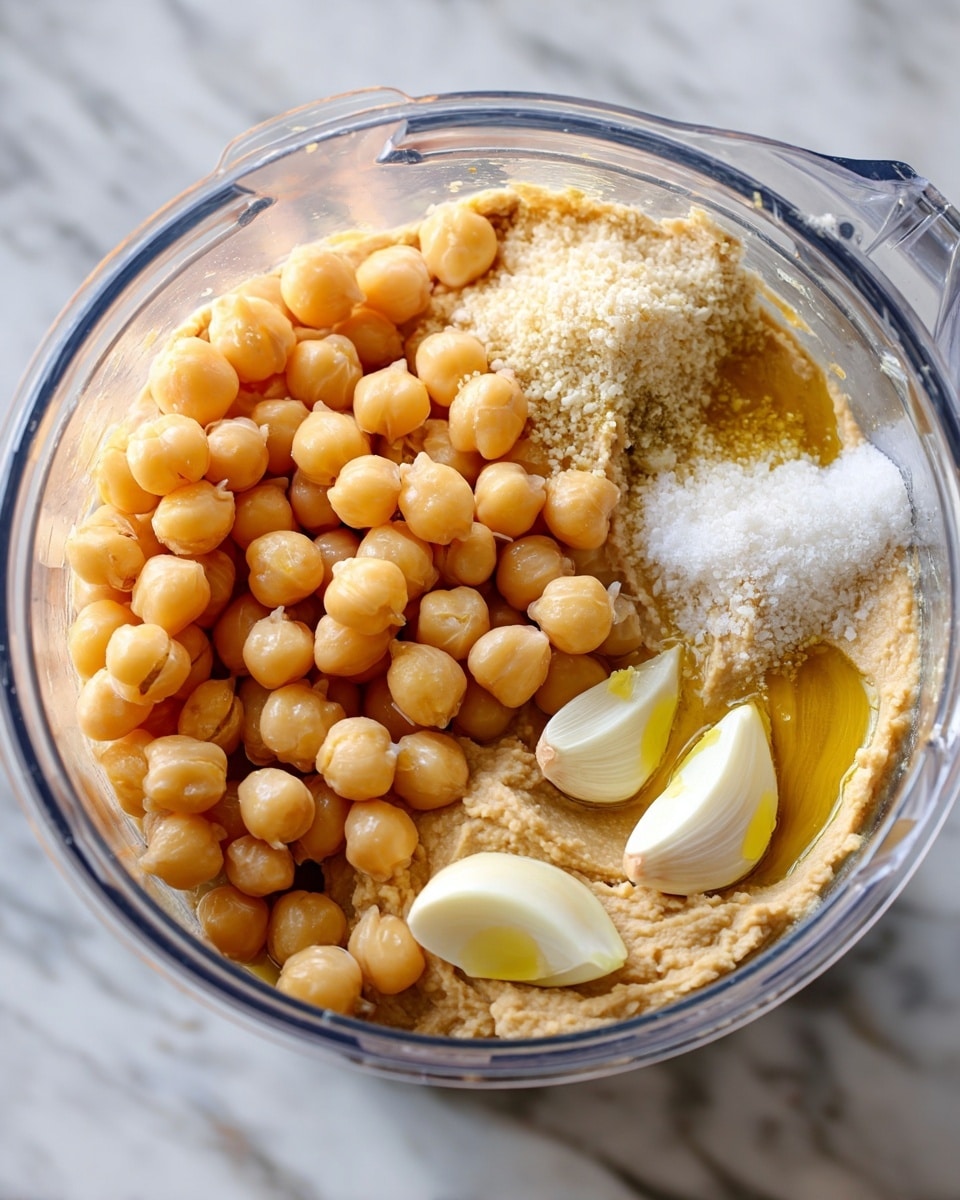
I add the chickpeas, tahini, cumin, olive oil, garlic, and lemon juice to a food processor.
I pulse everything until well combined, stopping occasionally to scrape down the sides of the food processor as necessary.
I continue processing until the chickpeas are thoroughly blended and the hummus reaches a smooth consistency.
I add salt to taste and adjust the seasoning as necessary.
If I want a brighter flavor or thinner consistency, I add more lemon juice. I can also add ice-cold water, one tablespoon at a time, while the food processor is running until I reach my desired consistency.
For the optional garnish, I transfer the hummus to a serving dish and use a small spatula or the back of a spoon to create a swirl on the surface.
I drizzle the hummus with olive oil and finish it with fresh chopped parsley and paprika before serving.
Servings and Timing
I can prepare this hummus in only 10 minutes, making it especially convenient when I need a quick dip or spread.
Prep Time: 10 minutes
Cook Time: 0 minutes
Total Time: 10 minutes
Servings: 8
Variations
For a different bean-based dip, I can replace the chickpeas with black beans or white beans. The texture remains creamy, but I get a noticeably different flavor profile.
If I don’t want to use tahini, I can omit it or replace it with peanut butter. I keep in mind that peanut butter gives the finished hummus a different flavor.
For extra heat, I like adding red pepper flakes or jalapeños. I start with a small amount and add more until the hummus has the level of heat I prefer.
I can also experiment with the spices. Paprika makes an easy addition, while extra cumin gives me a warmer, earthier flavor.
When I want especially bright hummus, I add a little more fresh lemon juice. I find that adding it gradually makes it easier to balance the acidity without overpowering the other ingredients.
Storage/Reheating
I store homemade hummus in an airtight container in the refrigerator for up to seven days. I keep it tightly covered so it stays fresh and doesn’t absorb other flavors from the refrigerator.
For longer storage, I can freeze the hummus in an airtight container for up to four months. I like adding a thin layer of olive oil over the surface before freezing to help retain moisture.
When I am ready to use frozen hummus, I thaw it in the refrigerator. After thawing, I give it a thorough stir to restore its creamy consistency. If necessary, I mix in a little olive oil or cold water.
I don’t reheat hummus for this recipe. I generally serve it chilled or allow it to sit briefly at room temperature before serving.
FAQs
How can I make my hummus smoother?
I let the food processor run for several minutes rather than stopping as soon as the ingredients are combined. Thoroughly processing the chickpeas helps me achieve a smoother texture. I can also drizzle in ice-cold water while blending.
What can I use instead of chickpeas?
I can use black beans or white beans for a different version. The flavor will change, but I still get a creamy bean-based dip that works well with many of the same seasonings.
Can I make hummus without tahini?
Yes. I can omit the tahini or replace it with peanut butter if I prefer. I expect the final flavor to be different because tahini contributes much of the characteristic nutty taste.
How do I thin hummus that is too thick?
I add ice-cold water one tablespoon at a time while the food processor is running. I can also add additional lemon juice if I want to thin the hummus while giving it a brighter citrus flavor.
Why do I use ice-cold water in hummus?
I find that ice-cold water helps loosen the hummus while maintaining a light, creamy consistency. I add it gradually so I don’t accidentally make the dip too thin.
Can I add more garlic?
Yes. I can adjust the garlic according to my preference. Since raw garlic can have a strong flavor, I add extra gradually and taste the hummus before adding more.
What can I serve with hummus?
I like serving hummus with pita bread, pita chips, crackers, carrots, cucumbers, bell peppers, and other fresh vegetables. I also use it as a sandwich or wrap spread and serve it alongside salads and grain bowls.
How long does homemade hummus last?
I keep homemade hummus in an airtight container in the refrigerator for up to seven days. I always use clean utensils when serving it and keep it refrigerated between servings.
Can I freeze homemade hummus?
Yes. I can freeze hummus in an airtight container with a layer of olive oil over the surface for up to four months. I thaw it in the refrigerator and stir it thoroughly before serving.
How can I garnish homemade hummus?
I create a swirl across the surface with the back of a spoon or a small spatula. I then drizzle it with extra virgin olive oil and sprinkle fresh chopped parsley and paprika over the top for extra color and flavor.
Conclusion
Homemade hummus is one of those simple recipes I can prepare again and again. With chickpeas, tahini, olive oil, lemon, garlic, and cumin, I can make a fresh and creamy dip in only 10 minutes without any cooking.
A quick and creamy classic hummus made with chickpeas, tahini, extra virgin olive oil, fresh lemon, garlic, and cumin. Perfect as a dip, sandwich spread, or addition to appetizer platters and grain bowls.
2 teaspoons extra virgin olive oil (optional garnish)
⅛ teaspoon paprika (optional garnish)
Instructions
Add the chickpeas, tahini, cumin, olive oil, garlic, and lemon juice to a food processor.
Pulse until well combined, stopping occasionally to scrape down the sides of the food processor as necessary.
Continue processing until the chickpeas are thoroughly blended and the hummus is smooth and creamy.
Add salt to taste and adjust the seasoning as necessary.
For a brighter flavor or thinner consistency, add more lemon juice. Alternatively, add ice-cold water 1 tablespoon at a time while processing until the desired consistency is reached.
To garnish, transfer the hummus to a serving dish and use a small spatula or the back of a spoon to create a swirl on the surface.
Drizzle with the optional extra virgin olive oil and finish with chopped fresh parsley and paprika before serving.
Notes
For especially smooth hummus, allow the food processor to run for several minutes and add ice-cold water gradually if needed.
Black beans or white beans can be substituted for the chickpeas for a different style of bean dip.
Tahini can be omitted or replaced with peanut butter, although this will noticeably change the flavor.
Add red pepper flakes or jalapeños for a spicy variation.
Add extra lemon juice gradually for a brighter, more citrusy flavor.
Serve with pita bread, pita chips, crackers, carrots, cucumbers, bell peppers, or other fresh vegetables. Hummus also works well in sandwiches, wraps, salads, and grain bowls.
Store in an airtight container in the refrigerator for up to 7 days.
Freeze in an airtight container for up to 4 months. A thin layer of olive oil over the surface can help retain moisture. Thaw in the refrigerator and stir thoroughly before serving.