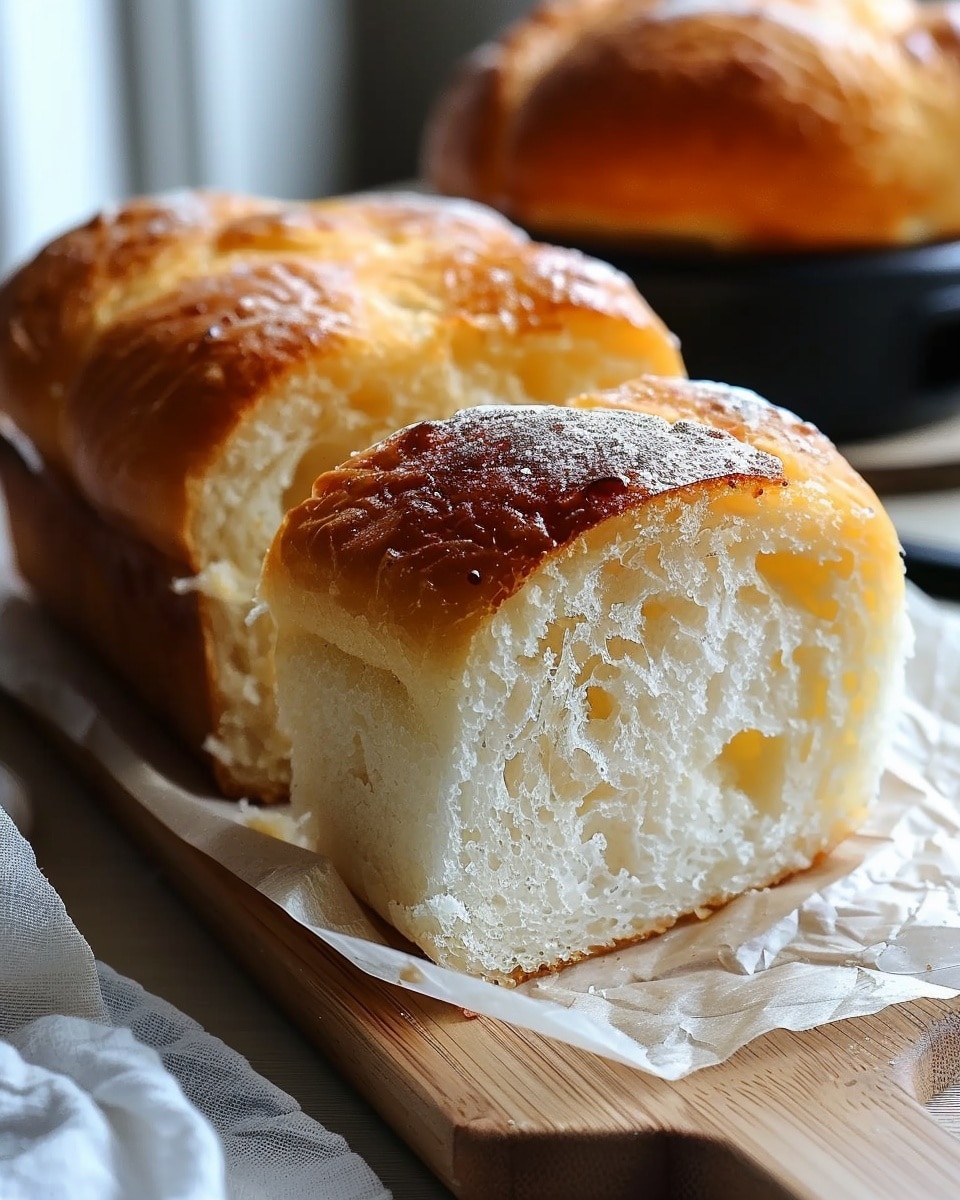
Why You’ll Love Fluffy Japanese Shokupan Recipe in 5 Simple Steps
I love this recipe because it’s simple, reliable, and produces an incredibly tender loaf every time. The dough is easy to work with, the rise is beautifully consistent, and the finished bread stays soft for days. I also enjoy how versatile it is, working just as well for savory fillings as it does for sweet toppings.
Ingredients
(Note: All ingredient amounts are listed in the recipe card below.)
I begin by mixing the bread flour, sugar, salt, and dry yeast together in a large bowl. I add the lukewarm milk and knead until a rough dough forms.
Once the dough comes together, I incorporate the softened butter and continue kneading until the dough becomes smooth, elastic, and slightly tacky. I cover the dough and let it rise in a warm place until doubled in size.
After the first rise, I punch the dough down gently and divide it into equal portions. I shape each portion into a roll and place them into a greased loaf pan.
I let the dough rise again until it fills the pan. While it rises, I preheat the oven to 180°C (356°F). If I’m using egg wash, I brush the top lightly before baking.
I bake the loaf until golden brown, then remove it from the pan and let it cool completely on a wire rack before slicing.
Servings and Timing
I make one loaf that yields about 8 to 10 slices. Prep and rising time takes roughly 1 hour and 45 minutes, baking takes about 30 minutes, and the total time comes to around 2 hours and 15 minutes.
Variations
I sometimes skip the egg wash for a softer crust or brush the loaf with melted butter after baking for extra richness. When I want a slightly sweeter bread, I increase the sugar just a little. I’ve also shaped this dough into rolls with great results.
Storage/Reheating
I store shokupan tightly wrapped at room temperature for up to three days. For longer storage, I slice and freeze it. When reheating, I toast slices lightly or warm them briefly in the oven to restore softness.
FAQs
What makes shokupan different from regular white bread?
I find shokupan softer, fluffier, and more delicate due to its milk-based dough.
Can I knead this dough by hand?
I do it by hand often, just kneading until the dough is smooth and stretchy.
Why is my dough not rising?
I check that the milk is lukewarm and the yeast is fresh.
Do I have to divide the dough?
I divide it to get the classic pull-apart texture, but I can bake it as one piece.
Can I make this bread dairy-free?
I’ve substituted plant-based milk and butter with good results.
How do I know when the bread is done?
I look for a golden top and a hollow sound when tapping the loaf.
Can I use all-purpose flour?
I can, but bread flour gives a softer and more structured crumb.
Why cover the dough while rising?
I cover it to prevent the surface from drying out.
Can I double the recipe?
I double it easily and bake in two loaf pans.
Is shokupan good for sandwiches?
I love it for sandwiches because it’s soft yet sturdy.
Conclusion
This fluffy Japanese shokupan is a bread I truly enjoy baking and sharing. I love its cloud-like texture, gentle sweetness, and versatility, making it a staple loaf that feels both comforting and special every time I make it.