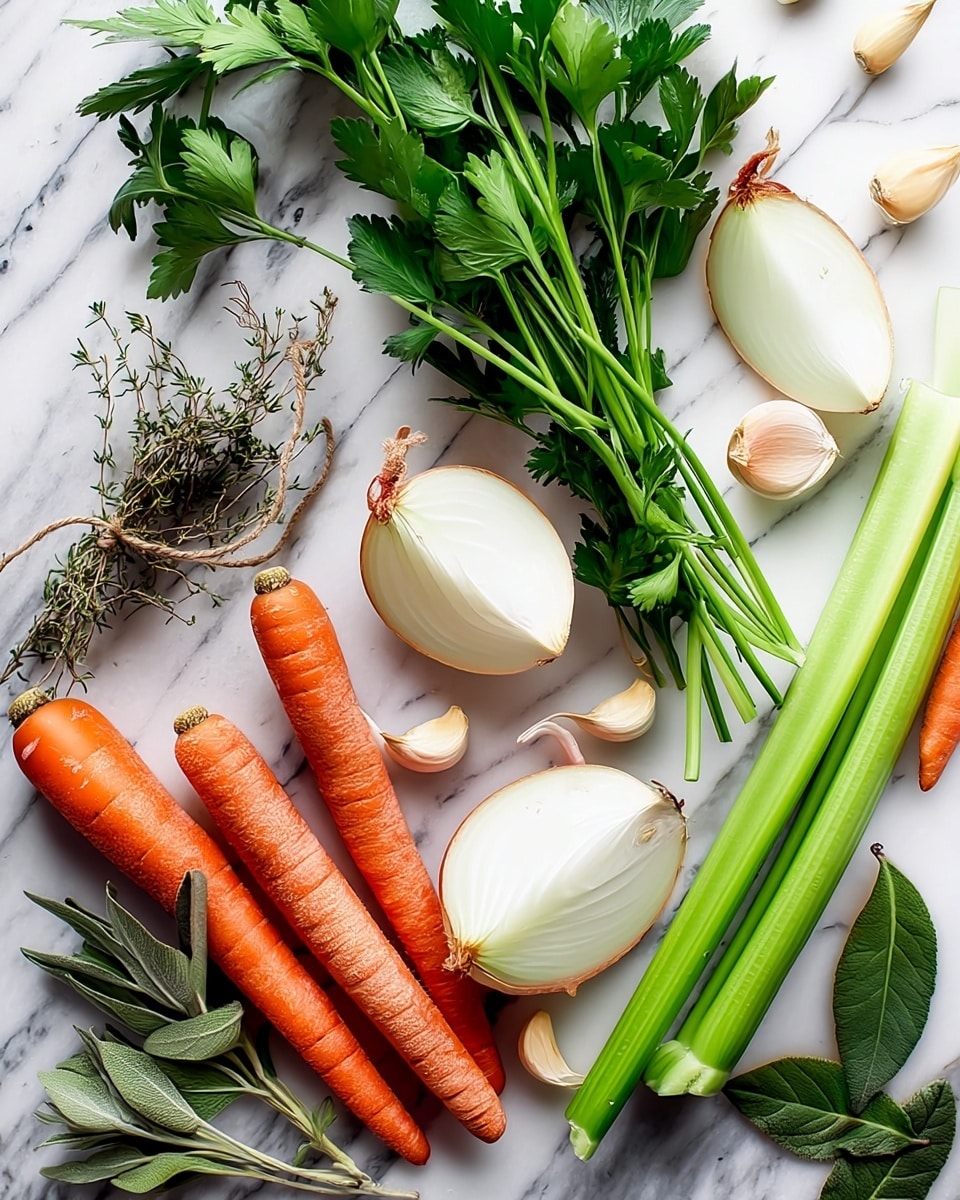
I love this recipe because it turns leftovers that might otherwise be discarded into a useful kitchen staple. After Thanksgiving or another turkey dinner, I can use the carcass, neck, leftover skin, and small pieces of meat to extract plenty of flavor.
I also appreciate how simple the ingredients are. Basic vegetables and fresh herbs transform the turkey bones into a rich, savory stock without requiring complicated preparation.
Another benefit is versatility. Once I have homemade turkey stock in my refrigerator or freezer, I can use it as the foundation for turkey soup, gravy, casseroles, sauces, rice dishes, and more.
I can even save vegetable scraps while preparing a holiday meal. Carrot ends, celery ends and leaves, and onion skins can all be saved and added to the stockpot, making this recipe an excellent way for me to reduce kitchen waste.
Ingredients
(Note: All ingredient amounts are listed in the recipe card below.)
Turkey Carcass
2 large onions, quartered
4 large Carrots
4 Celery Ribs
3 cloves Garlic, smashed
1 sprig Sage
4 sprigs Thyme
3 sprigs Parsley
1 teaspoon Peppercorn
2 Bay Leaves
1 gallon Water, plus more to account for evaporation as it cooks
Directions
Stovetop Option
I add the turkey carcass to a large pot along with the neck piece and any leftover skin or scraps of meat still attached to the bones. If the carcass doesn’t fit comfortably, I break it into smaller pieces with kitchen shears or a meat mallet.
I add the onions, garlic, celery, carrots, sage, thyme, parsley, peppercorn, and bay leaves to the pot.
I fill the pot with the water and bring everything to a boil. Once boiling, I reduce the heat and simmer the stock for at least 6 hours to develop a rich flavor. I add additional water as needed to compensate for evaporation.
After the stock has simmered for a few hours, I taste it and adjust the flavors according to my preference.
Once the stock has finished simmering, I strain it. I place a fine-mesh strainer over another large pot and carefully pour the stock through it. I discard the bones, vegetables, herbs, and other debris caught by the strainer.
If my finished stock contains a noticeable amount of fat, I refrigerate the strained stock overnight. The fat solidifies on the surface as it chills, allowing me to easily skim it off the next morning.
Slow Cooker Option
I combine all of the ingredients in an extra-large slow cooker or countertop roaster.
I cook everything on high for 1 1/2 hours and then reduce the heat to low and continue cooking for 6 hours or longer if I want an even more developed flavor.
When the stock is finished, I strain it through a fine-mesh strainer and discard the solids.
If needed, I chill the stock overnight and remove any solidified fat from the surface before storing or using it.
Servings and Timing
This recipe yields approximately 1 gallon of homemade turkey stock.
I consider most of the cooking time hands-off. Once everything is simmering gently, I mainly monitor the liquid level and add more water when necessary to account for evaporation.
Variations
I like using vegetable scraps instead of perfectly trimmed vegetables whenever I have them available. Carrot ends, celery leaves and ends, and onion skins are especially useful for adding flavor while reducing waste.
For a more herb-forward stock, I can add additional sage, thyme, or parsley. I keep the herbs balanced so they complement rather than overpower the turkey flavor.
When I want additional savory depth, I can include extra turkey neck pieces, wings, skin, or small scraps of meat left from carving the bird.
For a darker and more concentrated stock, I can roast the turkey bones and vegetables before simmering them. This creates deeper roasted flavors and a richer color.
I can also simmer the stock longer when I want a more concentrated result. As the liquid slowly reduces, the turkey and aromatic flavors become stronger.
Storage/Reheating
I cool my turkey stock promptly after straining it. Because a gallon of hot stock can take a long time to cool in one large container, I prefer dividing it among smaller, shallow containers before refrigerating.
I keep homemade turkey stock refrigerated in airtight containers and use it within about 3 to 4 days. For longer storage, I freeze it in freezer-safe containers or measured portions so I can thaw only as much as I need.
I leave some empty space at the top of containers when freezing because the liquid expands as it freezes. I can also freeze smaller portions for recipes that require only a little stock.
When I need to reheat the stock, I transfer the amount I need to a saucepan and heat it on the stovetop until steaming hot. If frozen, I can thaw it in the refrigerator first or gently reheat it from frozen in a saucepan.
FAQs
Can I make turkey stock from a leftover Thanksgiving turkey carcass?
Yes. I find a leftover roasted turkey carcass ideal for homemade stock. I use the bones along with the neck, skin, and small scraps of meat that remain after carving.
How long should I simmer turkey stock?
I simmer the stovetop version for at least 6 hours. A long, gentle simmer gives the bones, vegetables, and herbs plenty of time to flavor the liquid.
Do I need to break apart the turkey carcass?
I only break apart the carcass when necessary to make it fit comfortably inside my pot. Kitchen shears or a meat mallet can help me separate larger sections.
Should I keep adding water while the stock cooks?
Yes. I check the liquid periodically and add more water when significant evaporation occurs. This helps me maintain enough liquid while the stock develops its flavor.
Can I use vegetable scraps in turkey stock?
Yes. I save carrot ends, celery ends and leaves, and onion skins while preparing meals. I keep suitable scraps refrigerated until I’m ready to make the stock.
Why is there fat on top of my turkey stock?
Some fat naturally comes from the turkey skin and meat. When I want to remove it, I chill the strained stock overnight. The fat becomes solid on the surface, making it much easier for me to skim away.
Do I have to season turkey stock with salt?
I prefer leaving homemade stock unsalted or lightly seasoned because I often use it as an ingredient in other recipes. This gives me better control over the final seasoning when I make soup, gravy, or sauce.
Can I make turkey stock in a slow cooker?
Yes. I combine the ingredients in an extra-large slow cooker or countertop roaster, cook them on high for 1 1/2 hours, and then cook them on low for another 6 hours or longer.
Can I freeze homemade turkey stock?
Yes. Freezing is one of my preferred ways to store extra stock. I divide it into practical portions, place it in freezer-safe containers, leave room for expansion, and freeze it until needed.
What can I make with homemade turkey stock?
I use homemade turkey stock for turkey soup, gravy, stuffing, casseroles, sauces, rice, and other savory recipes that need flavorful cooking liquid. I especially like keeping some frozen so I have a convenient homemade base available for future meals.
Conclusion
Easy homemade turkey stock is a practical way for me to transform a leftover turkey carcass into something flavorful and versatile. With onions, carrots, celery, garlic, fresh herbs, and plenty of slow cooking time, I can create a rich stock with very little active work. Whether I make it on the stovetop or in a slow cooker, I end up with a useful homemade ingredient that I can refrigerate or freeze and use in soups, gravies, sauces, and comforting meals long after the original turkey dinner is finished.
This easy homemade turkey stock transforms a leftover turkey carcass, vegetables, and fresh herbs into a rich, savory cooking staple. Make it on the stovetop or in a slow cooker for soups, gravies, sauces, stuffing, and more.
Ingredients
1 turkey carcass, including neck, skin, and meat scraps if available
2 large onions, quartered
4 large carrots
4 celery ribs
3 cloves garlic, smashed
1 sprig sage
4 sprigs thyme
3 sprigs parsley
1 teaspoon peppercorn
2 bay leaves
1 gallon water, plus more as needed for evaporation
Instructions
For the stovetop method, place the turkey carcass, neck, leftover skin, and any meat scraps in a large stockpot. Break the carcass into smaller pieces if necessary to fit comfortably.
Add the onions, carrots, celery, garlic, sage, thyme, parsley, peppercorn, and bay leaves.
Add 1 gallon of water and bring to a boil. Reduce the heat and gently simmer for at least 6 hours, adding more water as needed to account for evaporation.
Taste the stock after it has simmered for several hours and adjust the flavor as desired.
Place a fine-mesh strainer over another large pot and carefully strain the stock. Discard the bones, vegetables, herbs, and other solids.
If desired, refrigerate the strained stock overnight and skim the solidified fat from the surface before using or storing.
For the slow cooker method, combine all ingredients in an extra-large slow cooker or countertop roaster. Cook on high for 1 1/2 hours, then reduce to low and cook for at least 6 additional hours.
Strain the slow-cooked stock through a fine-mesh strainer, discard the solids, and chill overnight to remove excess fat if desired.
Notes
Carrot ends, celery ends and leaves, and onion skins can replace some of the whole vegetables to reduce kitchen waste.
Add extra sage, thyme, or parsley for a more herb-forward stock.
Extra turkey necks, wings, skin, and meat scraps can be added for deeper turkey flavor.
For darker, richer stock, roast the turkey bones and vegetables before simmering.
Simmer the stock longer for a more concentrated flavor.
Leaving the stock unsalted or only lightly seasoned makes it easier to control the salt when using it in other recipes.
Cool the strained stock promptly by dividing it among smaller, shallow containers. Refrigerate in airtight containers for 3-4 days.
For longer storage, freeze in practical portions in freezer-safe containers, leaving room for expansion.
Reheat the desired amount in a saucepan until steaming hot. Frozen stock can be thawed in the refrigerator or gently heated from frozen.